The lessons of Afghanistan are in the message of Iran.
In geopolitics, as in war, it isn’t always the arsenal you have that matters. It’s the arsenal your opponent thinks you have.
In such high stakes negotiations as these, keeping your opponent guessing about your ultimate intentions, motives, boundaries, resources, et al is paramount.
Nations don’t just react to military capability. They react to posturing, impressions, even propaganda.
Often propaganda. See the cardboard tanks of the Cold War and the U.S. moon landing conspiracy theories for proof.
Countries react to what they think other countries are willing to do. And in that sense, the catastrophic U.S. withdrawal from Afghanistan may have done more than precipitously “end” one 20 year failure of a war.
It also have told Vladimir Putin something he very much wanted to hear: That the American military machine was tired, risk-averse, and not about to put boots on the ground for a vulnerable partner outside NATO.
That was not, of course, the only reason Putin moved on Ukraine. His ambitions there go back years, really decades, through the Orange Revolution, the 2008 NATO debate, Crimea in 2014, and the long war in the Donbas. Putin did not need Afghanistan to invent his imperial nostalgia or his grievance politics.
But Afghanistan may have acted as an accelerant. It confirmed his sense that the West had no stomach for direct confrontation and that the United States, in particular, was eager to get out of messy commitments rather than enter new ones.
And the Russians were not exactly subtle about drawing that lesson.
In August 2021, Nikolai Patrushev, one of Putin’s closest security allies, openly used the Afghan debacle to question U.S. commitment to Ukraine, essentially predicting that Washington would abandon Kyiv too.
Then, in December 2021 and again in February 2022, Joe Biden made clear that putting American troops on the ground in Ukraine was “not on the table,” and that the United States was not seeking direct confrontation with Russia. The White House later tried to walk back such comments. But it was already too late, of course.
Let’s not pretend Putin didn’t hear it. Of course he did. He knew the sanctions would be fierce. He knew the EU’s dependence on Russian energy would blunt such economic shocks nicely. He also knew American soldiers would not be coming to the defense of Ukraine.
Remember: Deterrence is not only about what you can do. It is also about what your enemy thinks you might do.
Putin appears to have concluded that the answer in Ukraine was limited. America would arm, fund, isolate, sanction, and denounce. But fight Russia directly over Ukraine? No. Not happening. Kabul helped create the psychological environment in which Putin believed the risks were manageable.
Now fast forward to Trump.
Whatever else one thinks about Donald Trump, and people think plenty, he has arguably been trying to reverse that psychological signal. Not by sending American divisions into eastern Ukraine. But Trump may be trying to change something else: the broader impression that America is afraid to fight.
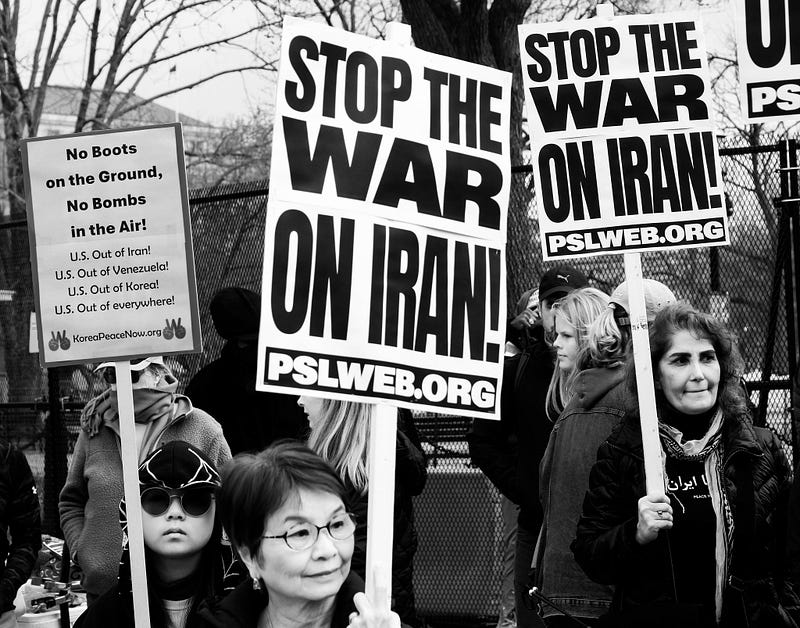
President Trump’s removal of Maduro in Venezuela sent friends and foes reeling, reviving a far more unilateral and force-forward image of American power. Then came Iran. Trump’s attack on Iran rattled Russian hardliners and put Xi Jinping on the back foot ahead of talks, precisely because Washington had now used force against another regime aligned, in various ways, with Moscow and Beijing.
Trump is trying to tell Putin and Xi: “You may have taken the lesson of Afghanistan to mean America won’t fight. But that lesson is no longer safe.” The new message is not that the United States wants a direct war with Russia over Ukraine or China over Taiwan.
The message is that America will fight if necessary, and that uncertainty is part of the deterrent.
If Putin believed, after Kabul, that Washington had become strategically predictable in the softest possible way, Trump’s behavior is designed to make America look strategically unpredictable in the hardest possible way. Unpredictable. Dangerous. Willing to strike. Willing to escalate against hostile states and rival-aligned regimes without first spending six months workshopping the optics in Brussels. That is not everybody’s idea of good statecraft. But it is a signal.
Afghanistan told Putin America would not fight. Trump may be trying to tell Putin and Xi that America will fight after all. And if your geopolitical enemies can no longer be sure where the line is, or whether you still believe in enforcing one, that uncertainty can become a weapon in its own right.
That may be the lesson of Iran. And after Kabul, it may be exactly the lesson the EU has wanted to teach Putin since he invaded Ukraine.
EU leaders may not like Trump’s methods. But theirs can hardly be said to have been as effective.
(Contributing writer, Brooke Bell)